
LARD BEDAINE: THE RESURRECTION OF THE BEAUTIFUL FREAKS
or: How a Bunch of English-Language Singing Misfits in French Montreal Proved That Rock and Roll Is Unkillable
by Lubin Bisson, with apologies to Lester Bangs
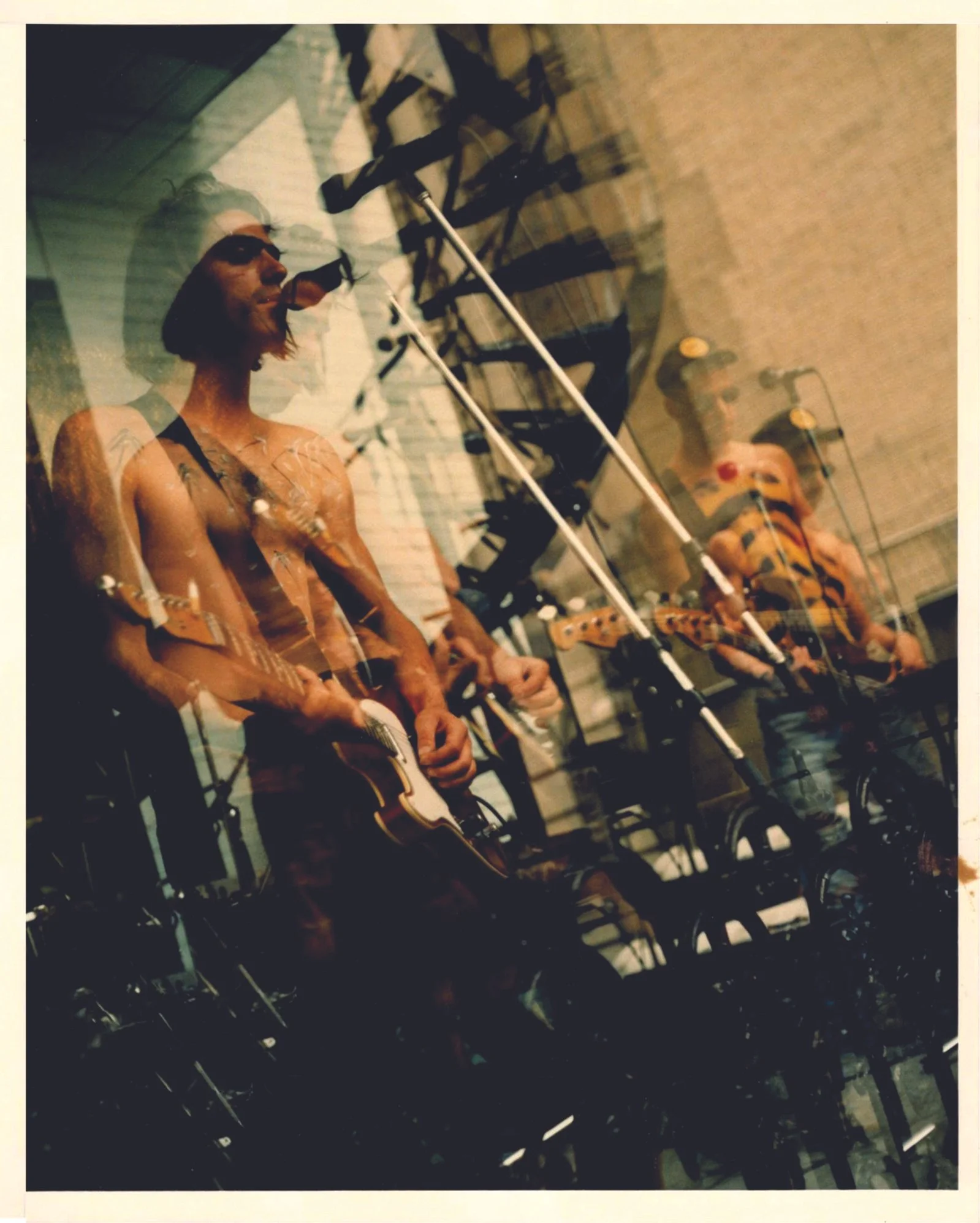
Let me tell you something about rock and roll in Montreal in the 1980s and '90s.
The whole gorgeous, sweaty, bilingual, politically fraught, desperately alive music scene was humming along in French, merci beaucoup, and that was right and correct and beautiful — but somewhere in the margins, somewhere on the poster tacked to the wall at the back of some club on St-Laurent, or avenue du Parc, or the local mecca that was, and still is, Les Foufounes électriques, there was a name. Lard Bedaine.
Jean-Noël Bodo and his crew singing in English in a sea of francophone punks and post-new-wave poets.
I never saw them live.
I want to confess that right now, the way a man confesses a sin he's carried for thirty years.
I knew the name.
I worked the networks and pounded the pavement for the Montreal Mirror, for VOIR, for HOUR Magazine — the holy trinity of Montreal's alternative press — and their name was always there, like a rumor of fire, listed among the coming attractions at the venues I was calling on, hustling ads, doing the daily grind of music marketing and media sales that kept those papers alive and kept the scene documented.
Lard Bedaine. Coming soon. Playing Thursday. Don't miss it.
And somehow I always missed it.
Later, at CIBL 101.5 FM — the urban alternative of Montreal radio, the station that actually gave a damn — I would sit with the programming director and the DJs who built the weekly charts and we would have the conversation.
You know the one.
The chart is French-language.
Those are the rules.
Lard Bedaine is singing in English.
We play them but we can't chart them.
They don't count.
And I would nod, because I understood the regulatory logic, and I would feel, somewhere behind my sternum, the dull ache of something unjust.
Because the music was there.
The people were listening.
The clubs were filling.
But the charts — those cold, institutional charts — could not see them.
Plus, with their 'French Name', speaking metaphorically, they may as well start wandering 40 years in the desert, as far as English-language radio was concerned.
This is what rock and roll has always been.
The thing that slips through the official tallies.
The band that doesn't show up on the spreadsheet.
The frequency the radio can't quite tune to, not because it isn't broadcasting, but because the dial hasn't been calibrated for it yet.
Lester Bangs understood this. (Google him).
Bangs understood that the greatest rock and roll was always the stuff happening in the cracks — the Velvet Underground playing to nobody, the Stooges getting bottles thrown at them, the Ramones blasting out three-chord salvation to thirty confused people in a leather bar.
The music that the industry doesn't know what to do with is usually the music that matters most.
Lard Bedaine, Jean-Noël Bodo's beautiful English-language anomaly in French Montreal, was exactly that kind of music.
Categorically unclassifiable. Stubbornly themselves.
Now it's 2026.
Jean-Noël and Lard Bedaine are back.
Twelve songs. An Album. Re-recorded on modern equipment, which means the thing that existed only as a rumor — a poster, a ticket stub, a name on a venue list, a conversation I had at a radio station about why they couldn't be on the charts — has been given a new body.
The old history has been cleared from the web to make room for the new chapter, which is either an act of creative audacity or the most punk rock thing I've heard all year, possibly both.
Punk's not dead. It never was.
It just goes quiet sometimes, waits in the margins, waits on the poster wall, waits for the moment when the noise gets too loud and the only answer is to pick up a guitar and prove that burning is better than rusting.
Jean-Noel Bodo has been burning for forty years.
He just turned up the amp.
There's more to the picture than meets the eye. There always was.
Welcome back, Lard Bedaine.
The charts still probably won't know what to do with you.
That's how you know you're doing it right.
My, my.
Hey, hey.
Rock and roll can never die.
Lubin Bisson
Essay by Lubin Bisson Former music marketing wizard with the Montreal Mirror, HOUR Magazine, and VOIR